Category: Network and IT System

  • How to set up PhpMyAdmin with MariaDB on Portainer with NGINX Proxy Manger.

    PhpMyAdmin is easy to set up for any app and fix the table database or troubleshoot. So, we will set up PhpMyAdmin with NGINX SSL secure for our HTTPS. Due to the possibility of a grabber username and password exploit, we would prefer not to expose this on HTTP.

    Please ensure that you complete this first. Before starting, we should make sure that this tutorial prevents hacking and exposes our port to the public. We do not want that to happen. We only want 80 and 443 to be open.

    How to set up Portainer with nginx Proxy Manager

    After you complete Portainer and nginx, we are good to go to build this app with nginx and PhpMyAdmin.

    Open Portainer → Stacks→ create stacks

    version: '3'
    services:
      pma:
        networks:
          - nginx
          - mariadb
        image: phpmyadmin/phpmyadmin
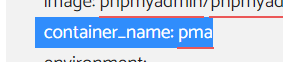
        container_name: pma
        environment:
          PMA_ARBITRARY: 1
        restart: always
        #ports:
         # - 8081:80
    networks:
      nginx:
        external: true
      mariadb:
        external: true

    I put hashtags on ports and port numbers because we don’t need them. We’ll just use nginx network on this app. Nginx proxy can talk to PhpMyAdmin instead of port or public. It is more secure to build our app before it is published to the public. Your sites can be injected with any insecure port.

    After deploying the stacks, your PhpMyAdmin is now online, but it won’t show up on the site because you didn’t set up the nginx proxy info. That would be our next step.

    You should open the nginx proxy manager for your site. My will be nginx__.richardapplegate.io.

    Thereafter, you’ll need to access your admin account. Add proxy host, then fill this detail.
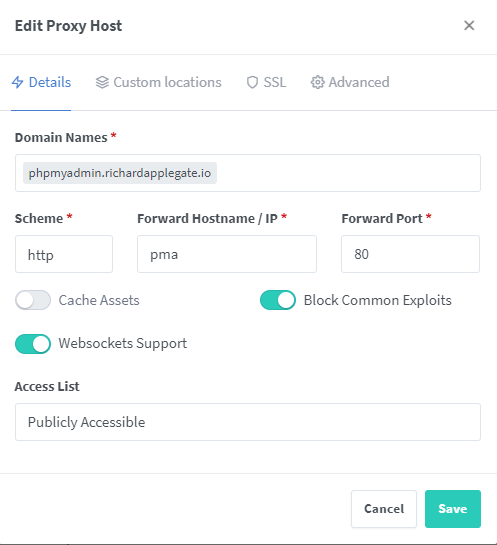
    I configured the PMA to forward hostname/IP as a result of setting docker-compose on the PhpMyAdmin container_name to the PMA. And this app uses 80 ports on the NGINX network.
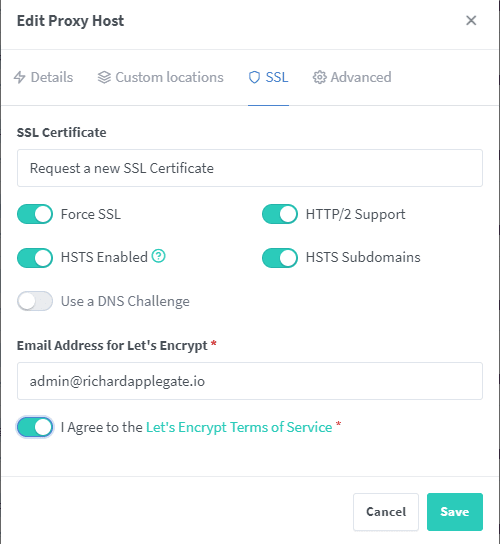
    Make sure you enable SSL and HTTP/2 and HSTS.

    Now you may be able to open your site with a domain without port. My will be phpmyadmin.richardapplegate.io. and working!
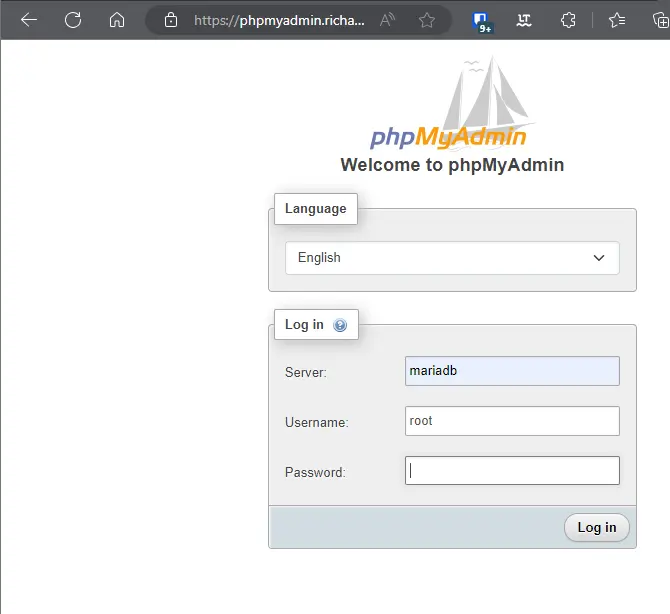
    Server: your database container_name on docker-compose. Mine is mariadatabase
    Username: your primary account for all database control. Mine is root.
    Password: you create the password and the password should on your docker-compose. You won’t be possible to log in my PhpMyAdmin because 3 times incorrect information, then you will be banned. You won’t access from my server or see my sites anymore for 1 week.

    You’re in the MariaDB database.
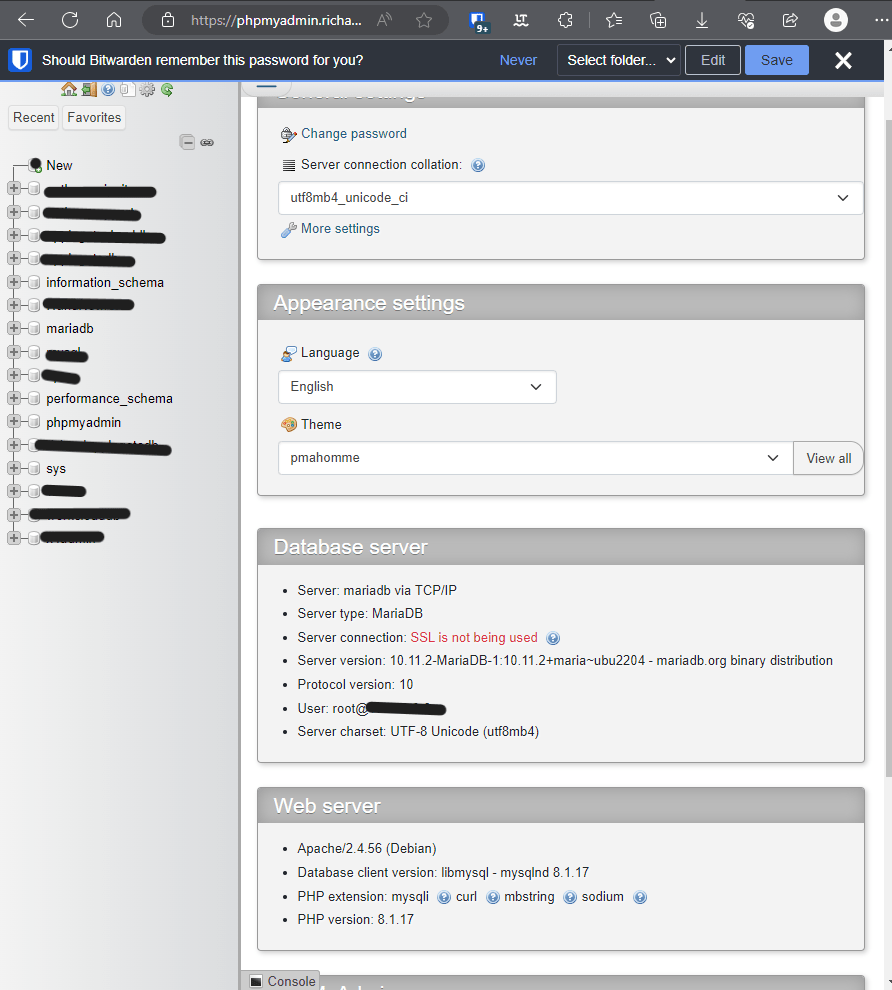
    “SSL is not being used” is normal because itself PhpMyAdmin is not on public, it is on nginx proxy manager. So, PhpMyAdmin is not public, it is full secured under the nginx. And you can see that we can create databases or tables or control user accounts.
  • How to set up Baserow on Portainer with nginx proxy manager

    This baserow is my absolute favorite, it’s more like a spreadsheet with more options and an easy-to-use database. It also had a Grid and Form and a Gallery and a Calendar! It’s great for our list of things to do.

    Look over Baserow.io!

    You’ll need Portainer and nginx running, remember? If not, here are my instruction to set up on your server.

    Let’s build stacks now.

    Open Portainer site → stacks → add stacks

    version: "3.4"
    services:
      baserow:
        container_name: applegate-baserow
        image: baserow/baserow:1.24.2
        networks:
          - nginx
          - mariadb
        environment:
          BASEROW_PUBLIC_URL: 'https://sub.domain.com'
        volumes:
          - /yourpath/baserow/data:/baserow/data
    networks:
      nginx:
        external: true
      mariadb:
        external: true
        

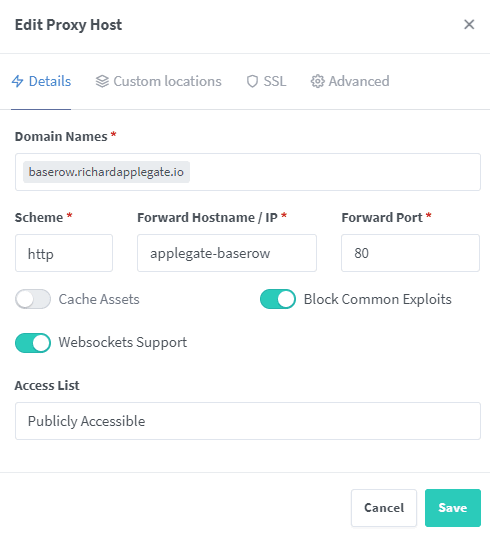
    Before you deploy, please ensure you follow the high light and modify and edit the networks to match your nginx proxy manager and MariaDB Database Network. Then, deploy the stack and this app is online but not show on site. We need to go to nginx proxy manager to set up a proxy host for baserow.

    Scheme – HTTP
    Forward Hostname – Your container_name here
    Forward port – Expose 80 to here.
    ensure to enable SSL and HTTP/2 and HSTS

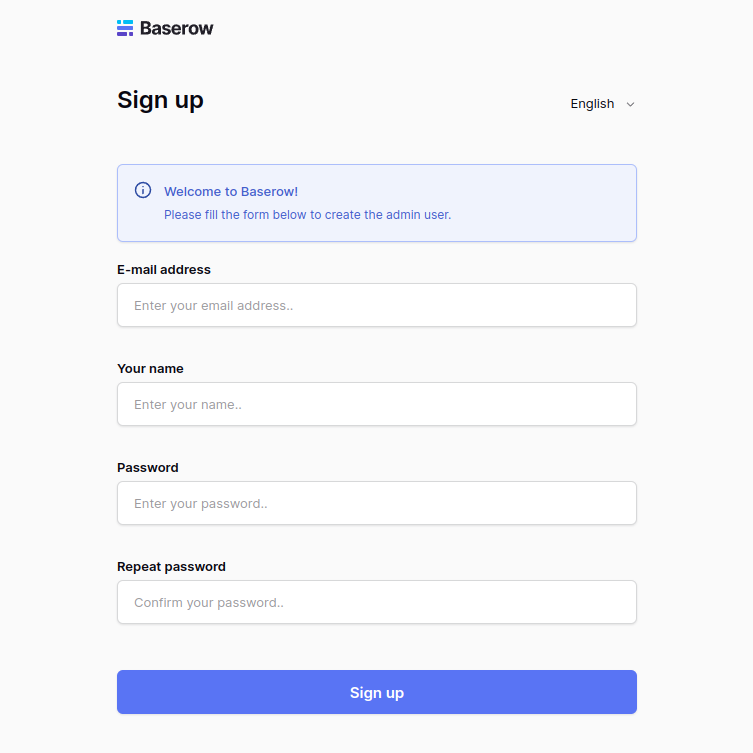
    The sign-up form should appear when you open the base row. Please complete it for the first user, and this account will provide you with an admin account.

  • How to set up agent edge on multiserver

    Docker-compose is my go-to for secondary or distributed servers. It’s better than docker run because it’s more clean and organized and easier to set up. And one time, too.

    So all you need to do is make sure the Secondary Server or Multiserver needs to install Docker and Docker Compose. Please follow this step by step.

    Install Docker Engine on Ubuntu | Docker Documentation

    Now that we have created the docker-compose files, we can create them where you want them to be saved. The secondary server has not yet set up Portainer, so this tutorial is for using SSH instead of Portainer. The docker compose will do the job, and our primary server will attach secondary from an outside server. This is cool, no need to use a port or anything else.

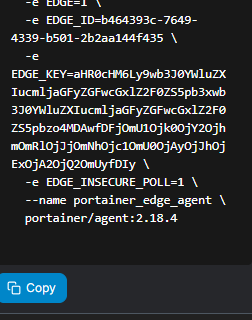
    Open the Portainer site on the primary server, then go to environment, add environment, Docker standalone, start wizard, and edge agent standard. Write down your edge ID and key in this way.

    You should see Edge ID and Edge Key on the primary Portainer site.

    Please ensure that you obtain the Edge ID and Edge Key. Make sure to change your volume path and change your volume path. Look for the highlights below.

    Version: '3.9'
    services:
        agent:
            image: 'portainer/agent:2.20.2'
            container_name: portainer_edge_agent
            environment:
                - EDGE_INSECURE_POLL=1
                - EDGE_KEY=
                - EDGE_ID=
                - EDGE=1
            restart: always
            volumes:
                - '/yourpathportainer/data:/data'
                - '/:/host'
                - '/var/lib/docker/volumes:/var/lib/docker/volumes'
                - '/var/run/docker.sock:/var/run/docker.sock'
    

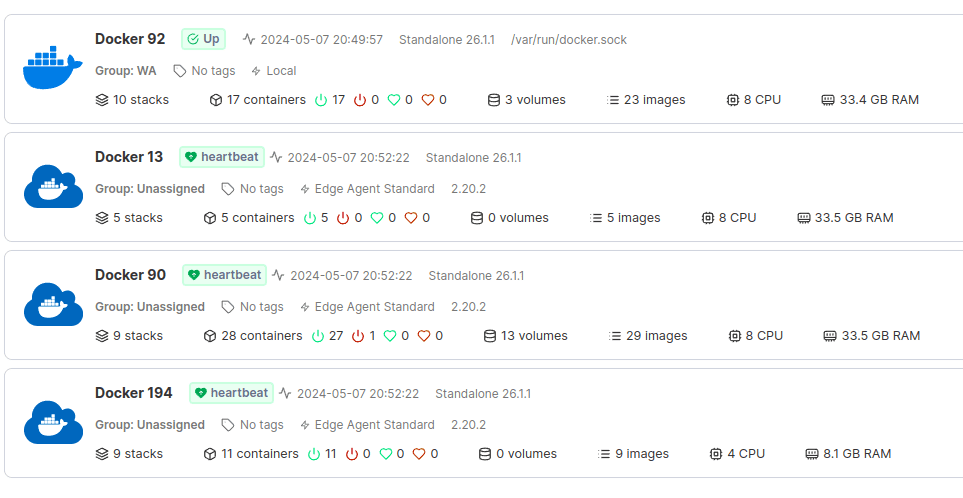
    After deploying the stack, your secondary portainer should be active and should appear on your primary portainer. Look like this:

    Continue to deploy and build Docker Portainer many more servers to benefit the future!

Secret Link